
When People Become the Environment
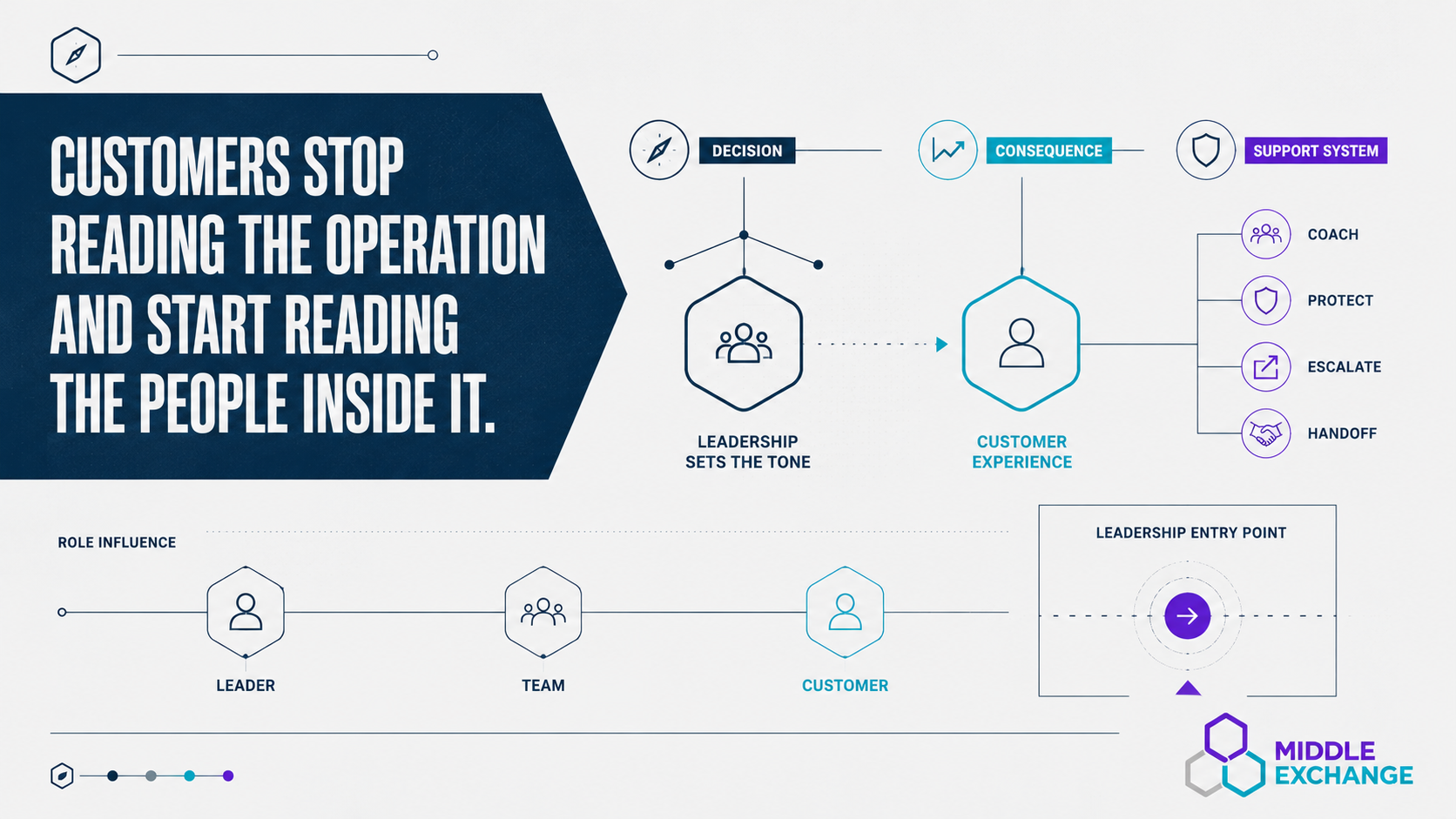
When People Become the Environment begins with a simple observation: The moment direct interaction begins, employee behavior becomes part of the physical environment customers must navigate. It is easy to treat this as a matter of tone or personality. In practice, it is a checkpoint where customers interpret the condition of the entire operation through one visible human exchange.
The customer does not have access to the full system. They do not see every staffing decision, interruption, handoff, delayed response, policy constraint, or piece of missing information. They experience the result through what is available to them: pace, posture, clarity, acknowledgment, emotional control, and whether the environment still appears able to include them.
There comes a point inside every customer experience where movement and coordination fade into the background and human interaction becomes the environment itself. The customer is no longer primarily reading shelves, queues, timing, or operational structure. Now they are reading people. They study tone.
They study responsiveness. They study facial expression. They study body language. They study emotional availability. The useful point is not to turn every service moment into emotional theatre. It is to recognize that emotional interpretation is already happening, whether the business designs for it or not.
This becomes especially important in retail stores, restaurants, pharmacies, service desks, food stalls, pickup points, and other Caribbean business environments where operational pressure can become visible very quickly. Customers begin interpreting availability, posture, expression, and energy before formal service begins. The customer may personalize that pressure even when it began far away from the frontline person.
For leaders, the first task is observation. Stand where the customer stands. Watch what happens immediately before the interaction changes. Look for recurring interruption, unclear ownership, awkward movement, missing information, queue uncertainty, or pressure without a recovery route. Behavior becomes more useful when it is treated as data.
The practical checkpoint shift is direct: Audit the first ten seconds from the customer’s point of view and make availability readable. This is not a request for constant cheerfulness. It is a way to protect clarity, dignity, and human presence while the operation continues doing real work under real conditions.
Customers stop reading the operation and start reading the people inside it. That line matters because customers rarely separate the interaction from the organization behind it. The person, the process, and the atmosphere arrive as one experience. A small change at the checkpoint can therefore change how the entire business is remembered.
People experience businesses one checkpoint at a time. The question for operators is not whether pressure exists. It is whether the next checkpoint helps people navigate that pressure without losing trust. Choose one checkpoint to redesign before the next busy period.
Enjoyed this checkpoint? Share it.
Comments
Sign in to join the conversation.
- No comments yet — be the first.